
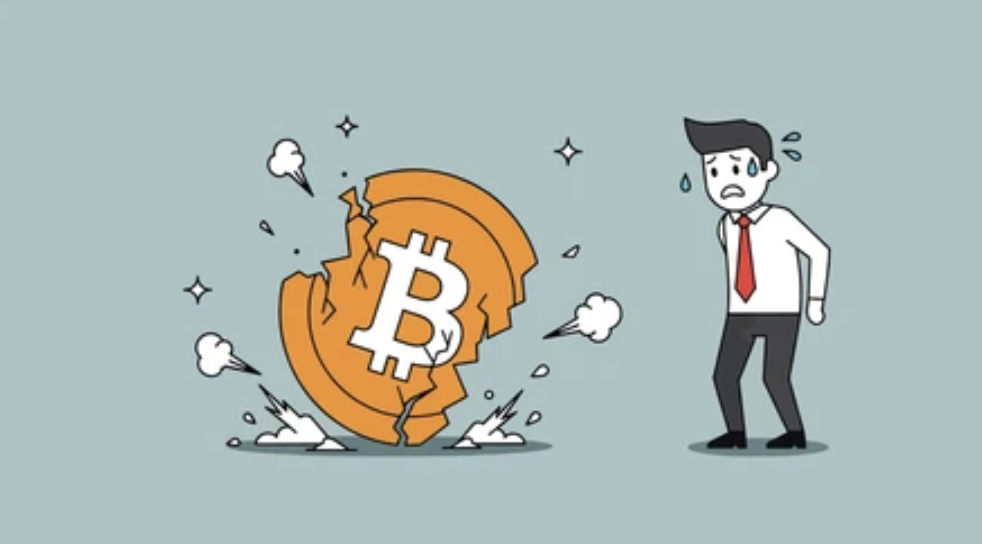
In 2022, roughly $2 trillion was wiped from the crypto market. A lot of people lost real money, myself included.
Some of this was macro. Central banks raised interest rates to fight inflation, which made risky assets less attractive across the board. Money moved out of crypto and into bonds and savings accounts that suddenly offered meaningful returns. That's a normal market correction.
But the rest of it wasn't. The rest was a cascade of failures that exposed something specific about how crypto products were built.
Traditional finance has a lot of friction built into it. Withdrawal limits. Reserve requirements. FDIC insurance. Regulatory oversight. These things slow you down. They also slow down panic. When something goes wrong, the mechanisms give the system time to stabilize before everyone can exit at once.
Crypto, by design, removed most of that friction. Fast, permissionless, no intermediaries. That's the pitch. What 2022 showed is what happens when there's nothing to slow down a bank run.
The Terra collapse
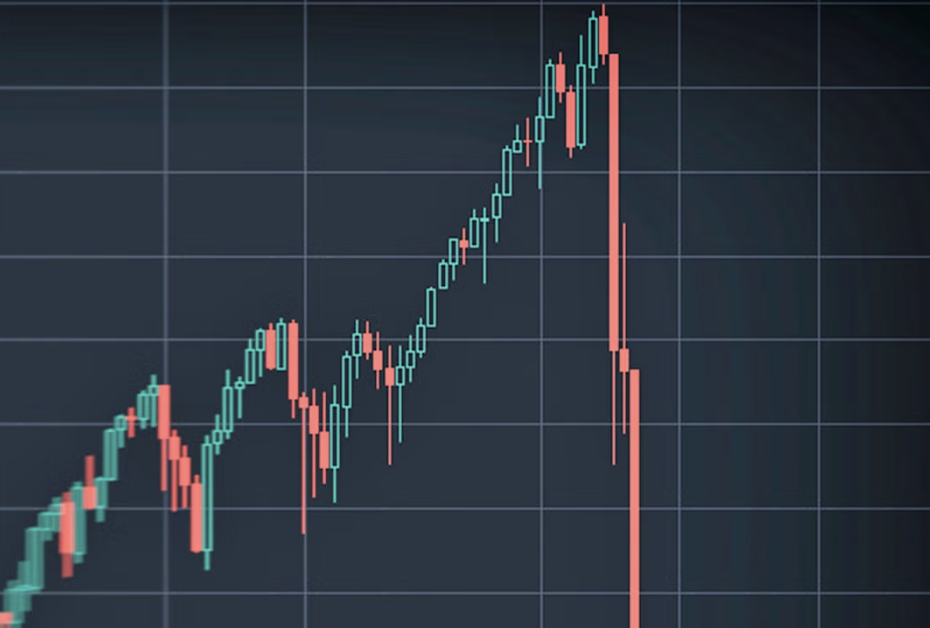
The first major failure was Terra, a stablecoin that was supposed to hold a fixed value of $1.
Most stablecoins maintain that peg by holding actual dollars or dollar-equivalent assets in reserve. If you want $100 worth of the coin, there are $100 sitting somewhere backing it. Terra did something different. It used an algorithm.
The system worked by pairing two tokens: UST (the stablecoin) and LUNA. When UST drifted below $1, the protocol would burn UST and mint LUNA to bring the price back up. When UST drifted above $1, the reverse happened. The peg was maintained by arbitrage incentives and the interplay between the two tokens.
This worked as long as confidence held. The moment it didn't, the mechanism ran in reverse. As UST lost its peg, holders rushed to exit. That exit pressure minted massive amounts of LUNA, which collapsed LUNA's price, which made the situation worse. The stabilizing mechanism became the accelerant.
$40 billion in value was gone in about a week.
There was no reserve. No backstop. No cooling-off period. Nothing to slow the exit down. The system was designed to be frictionless, and when trust broke, frictionlessness meant it could unravel in days.
Celsius and the lending platforms

A month after Terra, Celsius Network filed for bankruptcy.
Celsius let users deposit crypto and earn yield, similar to a savings account. The company took those deposits and lent them out at higher rates, keeping the spread. This is basic banking, except it operated without the requirements that govern banks.
Banks are required to hold a percentage of deposits in reserve so they can meet withdrawals. They're subject to stress tests, capital requirements, and oversight. If there's a run, deposit insurance buys time.
Celsius had none of that. When the broader market started falling and users tried to withdraw, Celsius didn't have the liquidity to pay them. It froze withdrawals and eventually filed for bankruptcy.
Voyager Digital failed the same way around the same time, partly from direct exposure to Three Arrows Capital, a hedge fund that had made highly leveraged bets on assets that were now collapsing. When Three Arrows couldn't pay its debts, Voyager couldn't cover the gap.
The common thread: these platforms looked like banks, offered bank-like yields, and users treated them like banks. But they didn't have the protections that make banks survivable under stress.
FTX

FTX was one of the largest and most visible crypto exchanges in the world, valued at $32 billion at its peak. It had celebrity endorsements, naming rights on a sports arena, and a founder who was regularly quoted in mainstream financial press.
It collapsed in about four days.
A report surfaced in early November 2022 raising concerns about the financial relationship between FTX and Alameda Research, a trading firm run by the same founder, Sam Bankman-Fried. The report suggested customer deposits held at FTX had been used to fund Alameda's trading activity.
When that became public, Binance, another major exchange, announced it would sell its holdings of FTX's exchange token. That triggered a wave of withdrawals. FTX processed about $6 billion in withdrawals in 72 hours before halting them. It then filed for bankruptcy.
Bankman-Fried was later convicted of fraud and conspiracy.
What made FTX different from a traditional exchange failure is how fast it happened. A conventional brokerage has regulatory safeguards that require segregation of customer funds. Those rules exist specifically because this scenario is not hypothetical. FTX operated mostly outside those requirements. When the news broke, there was nothing to slow the exit.
BlockFi, a lending platform with significant exposure to FTX, followed into bankruptcy within weeks.
What actually happened
Each of these failures is different in the details. Terra was a flawed mechanism. Celsius and Voyager were fractional-reserve businesses without the protections that fractional-reserve banking requires. FTX appears to have been outright fraud.
But they all broke fast for the same underlying reason. The products were built to minimize friction: fast access, no intermediaries, no regulatory overhead. That's genuinely useful in normal conditions. Under stress, it meant there was nothing to absorb the panic.
Traditional finance is slow and bureaucratic and frustrating for a lot of good reasons. Those constraints exist because people have tried removing them before. The history of financial crises is largely a history of what happens when the safeguards get stripped away.
Crypto had a version of that history compressed into a single year.
For years, the crypto market operated separately from the traditional financial sector. However, as investors saw how much money flowed into crypto, the more financial investors and lending firms became involved. They wanted a piece of the pie too. They started offering services to crypto companies.
When crypto firms started collapsing, the damage didn't stay in the crypto world — it brought down regular banks with it. In early 2023, three banks failed: Silicon Valley Bank, Silvergate Bank, and Signature Bank (the fact that they all start with an S is a coincidence). These banks didn't trade cryptocurrency, but they worked closely with crypto companies, and took their money.
All three banks fell one after another, much like the crypto firms before them. This chain reaction shows that crypto and traditional finance are no longer separate. A crisis in one can quickly trigger problems in the other. I know I'm not the only one nervous about this relationship.